

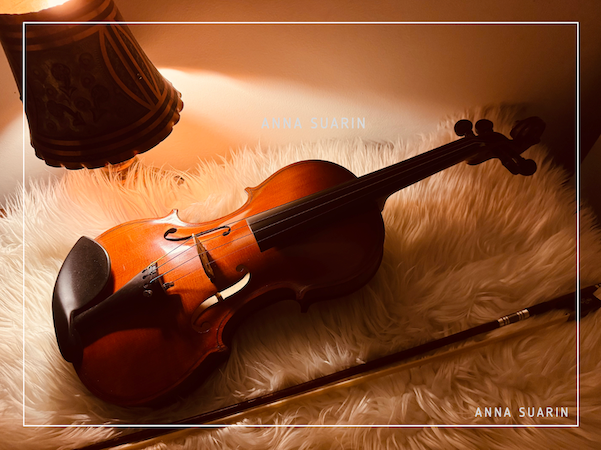
Violin and the union with the music within
Amid the madness and chaos, there lies a space for creativity and quiet. Here, I found the joy of music. The conversation is nothing forced; it flows like a river that keeps on giving, and loving.
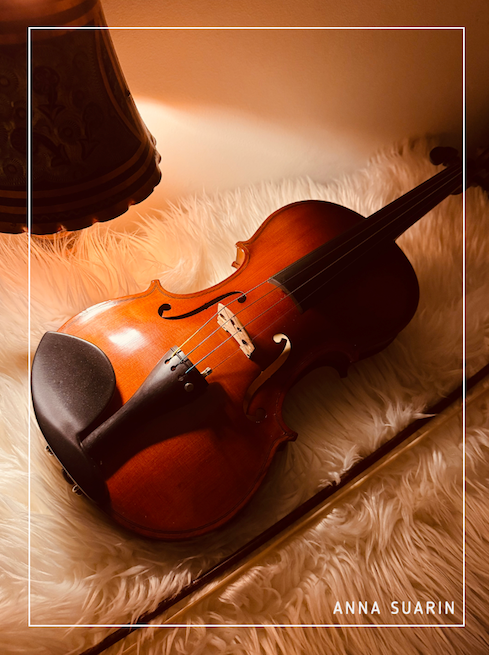
In this little corner, there is so much room for exploration; the poetry in my mind keeps on writing. As a young child and up to now, the sound of nature has always given solace.
Birds chirp with the warmth of the morning sun; rains fall on the leaves, singing melodiously, sometimes awakening melancholy.
Taking up the violin was like a childlike rendezvous into the unknown. It was an intrepid act of self-knowing, or perhaps it is the longing for union with the universe-divine. Or with the music within.
Have you found your music? Have you fallen in love with the sound of the swaying of the bamboos; or even the harmony of the dripping water in the suikinkutsu? There is so much to be embraced in the music of everyday life. But sometimes, we forget to listen.
And so, I urge you, take up music. In whatever form. Embrace it. Let it fill you, love you, and give you hope.
It was a little dream that I’ve nurtured for so long. And one day, last year, I said, this is it. Now is the time to finally start a real conversation with the enigmatic muse inside; the one who resides in the symphony in my dreams. Or perhaps, it was her victory that I finally listened.
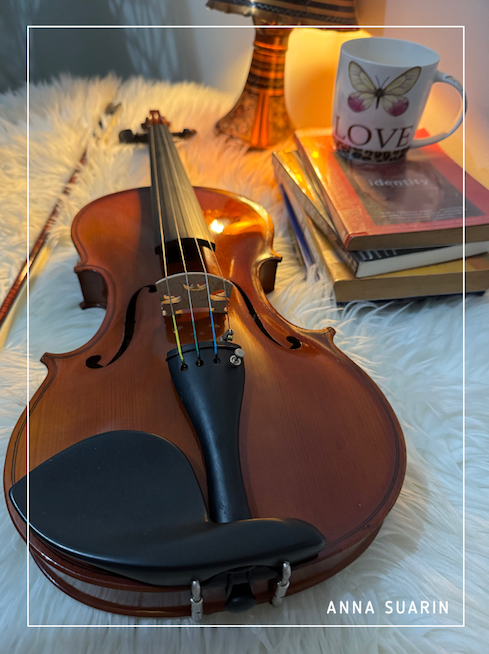
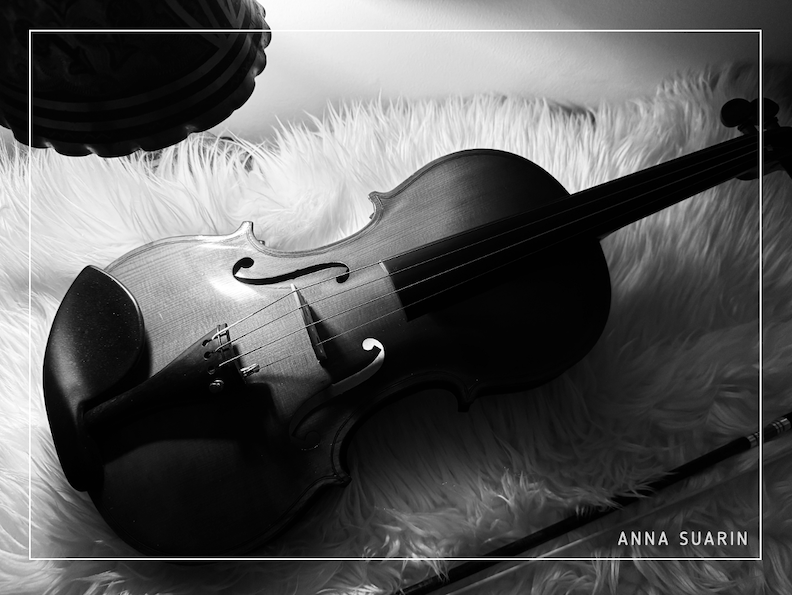
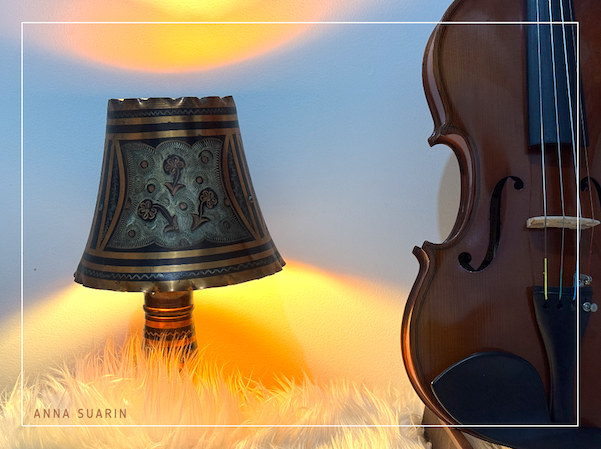
Baby steps, baby steps. Darn, it was not easy. There was a demand for discipline; a commitment that does not bend. It was like signing up for a sublime agreement that can’t be put into words. It was only between you and your creative muse–the one that keeps on giving, only if you dare to dance unabashedly.
Dance, I did. There were so many missteps. Double steps, double steps. One, two, three. Jump, if you must. Or even cry. Oh, how the tears kept on falling! Even the tears tasted of music, of poetry, of the shadows between the noise and the quiet.
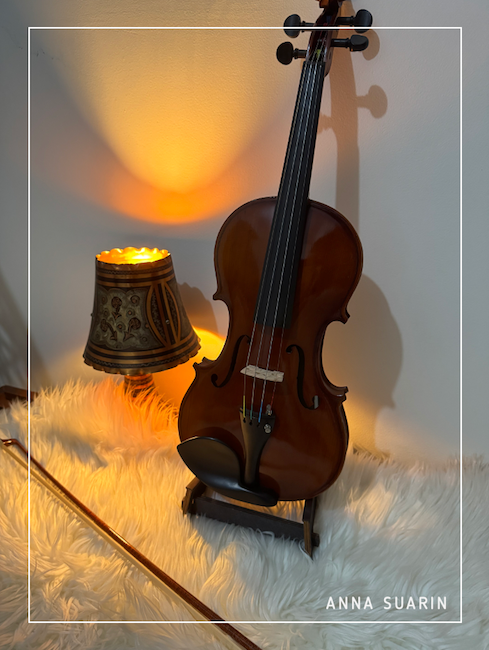
With every broken note or the shrill of the bow gone crazy, there was a lesson to be learned.
Patience.
Gratitude.
The beauty of waiting.
The serendipity of time.
The absolute kindness of the present.
We are humbled by the work of the great masters. What was in the mind of Mozart when he composed Jupiter (Symphony No. 41)? What moved Beethoven as he co-created String Quartet in C sharp minor, Op. 131 (1826) with his muse? What inspired Bach when he was birthing Brandenburg Concertos? All of us, we strive to reach our highest; and in the great works of the masters, we are invited to partake of their inspiration.
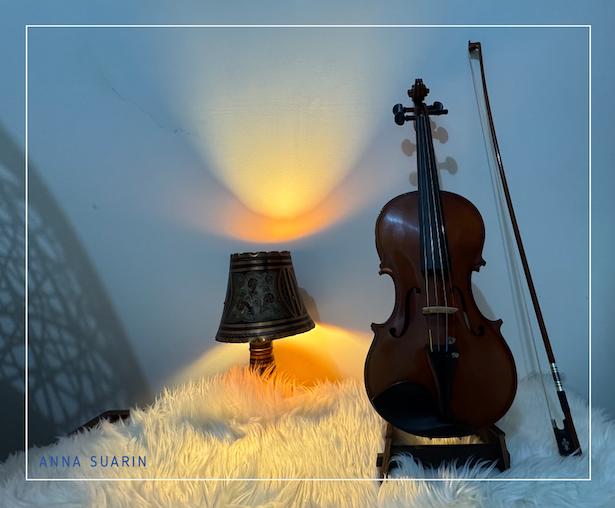
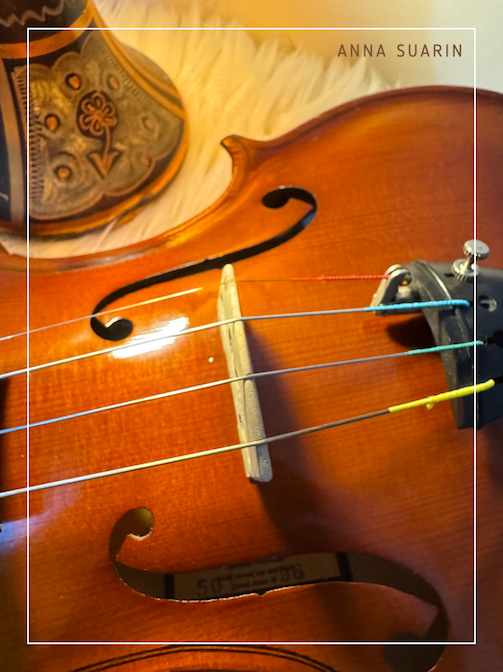
What is the sound of time? Tic, toc, tic, toc. Is it soft, consistent, and melodious? Or is it raging, like the unpredictable roughness of waves in an ocean perturbed by storms and the wars of politics? Whatever you may hear, listen. With eagerness; with the innocence of a child’s faith in stars and rainbows and fairies.
Historians say Mozart created his Jupiter, his last symphony, in what could be the most difficult time of his life. Yet, listening to it, one can experience the depth and richness of his storytelling. Or perhaps, the difficulties, as he faced his eventual end, were to become the well from which he drew the soul of this masterpiece. Jupiter’s second movement, Andante cantabile (F major), is “lyrical and expressive. It opens with a simple, songlike theme that feels almost “innocent,” but Mozart gradually builds it into passages of intense drama” (The Mozart Portal, n.d.). This is said to be unusual in 1788, “the harmonies here become quite bold and chromatic at times, heightening emotional tension” (The Mozart Portal, n.d.).
We are weaving our own stories. There is a profound daring and boldness in finding the Mozart or Beethoven or Bach in each one of us. No matter what life brings, we co-create and live through the music of our heart.
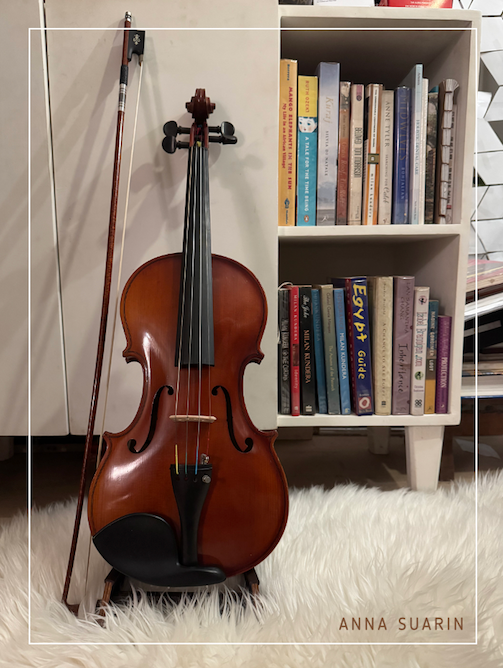
May this space and time allow a rediscovery of and a reunion with art, music, and poetry. May your life continue to be shaped by the beauty of your courage. May you always find meaning and a sense of awe in every moment–knowing that even the mundane completes the song that only you can sing.
May this also serve as a simple appreciation for those who continue to share and support the co-creation of music.
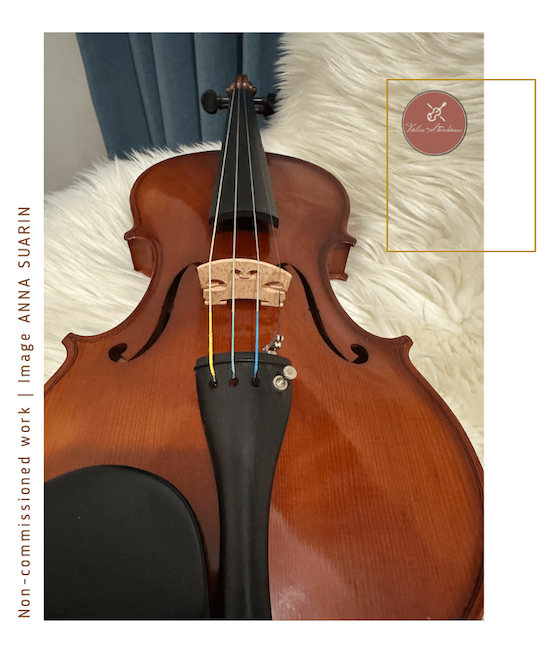
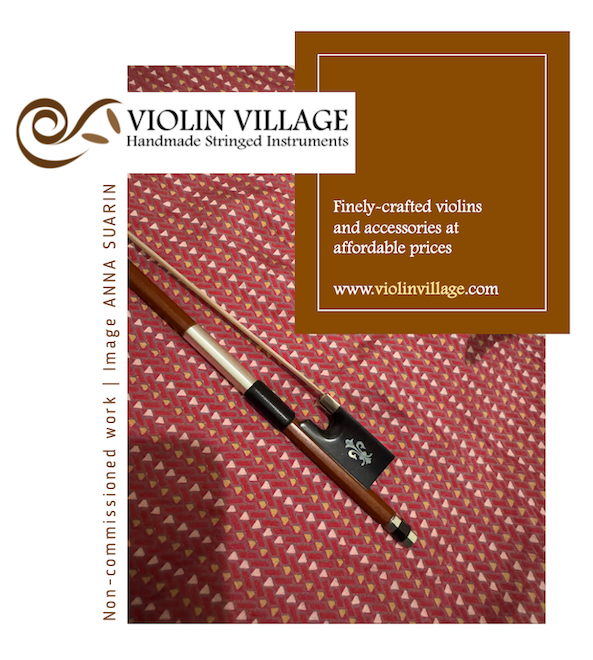
Violin Village (violinvillage.com) is a reliable seller of finely-crafted violins and accessories. They also have an in-house luthier who worked on the restoration of my 30-year old violin. I highly recommend him if your violins need repairs and maintenance. (Thank you, Sir Rick!)
Violin Storehouse sells pre-loved violins. Practice due diligence when buying but based on my experience, this seller offers great options and is easy to deal with.
[Note: This is not a commissioned work and I’m not, in any way, related to the vendors mentioned in this post.]
Important learnings and tips (especially for adult learners)
[1] Buying your first violin. Brand new or pre-loved? This has often been asked in forums. I think it does not matter at all if cost is not an issue. In may be practical to try a pre-loved violin first before committing on a more expensive or higher-level violin. This way, you will be able to determine if violin is really for you. It’s not an easy instrument to learn but certainly worth all the time and efforts.
Another question is, do I really need to begin learning through a student violin? Again, if cost is not an issue, I’d suggest to skip the student violin and get yourself a violin in the intermediate range. For one, the sound /tonal quality will likely be better. This is also one of the reasons why a pre-loved violin will work. If there’s a pre-loved shop near you, there is a chance that you can find a pre-loved violin there that is already in the intermediate range and at a price point that is closer to the price of brand new student violin (or just slightly higher).
[2] Price point for pre-loved violins (Philippines). The recommended price points for pre-loved (intermediate) ones are in the range of PhP4,000 to 10,000 (or higher, depending on the brand, made, age, and other factors). To be safer, consider the P6,000 (or higher) price point. Again, do be very careful as old ones will likely need some works by a reliable and skilled luthier so ask seller if, at the minimum, the body has no major damage and all pegs are working. (Strings and the bridge can be easily replaced so don’t sweat on these too much.)
Be wary of the ‘too good to be true’ price offers. While they may work, the tone will likely break your heart (or your neighbors’ goodwill in the first few months, lol). There is no issue with buying a student violin at a price point, of say, P5,000. (Reliable sellers like Violin Village has a good option in that price range.) However, if you’re an adult learner, be ready that once you advance in your learning, you will certainly notice that “something is missing.” Therefore, with P5,000, it may be better to look for a sturdy pre-loved (intermediate) violin, spend a little bit more on its restoration and voila, this may actually become one of your forever violins. (Or, save up some more and get a brand new intermediate violin instead. Violin Village offers intermediate violins in the range of P10,000 – 30,000 based on its September Catalogue. Again, I’m not in anyway connected with them but their luthier is my go-to when my violin needs some TLC).
[3] Online purchase. Avoid buying online unless you trust the seller or offers “return” or exchange, it is advisable to physically inspect and play with actual violins first before purchasing. (I bought my pre-loved violin online from Violin Storehouse but I requested for sound samples and closely inspected the images. Moreover, I managed my expectations and prepared for the possibility of disappointment. Thankfully, what “chose” me is playing beautifully! It’s 30 years old and is the gorgeous violin in this post. I’m so thankful to Sir Rick of Violin Village for restoring it and taking care of its maintenance. He recently installed its geared pegs–see note 5 below–and he did it so well.)
[4] Landing zone on String E. I have not really seen a discussion on this online but the landing zone beside String E is important. Ensure that your chosen violin follows the standard measurements where your pinky finger (the weakest finger) will have enough landing space beside String E. (That’s why it is important to play with actual violins before purchasing one. If you really need to buy a violin online, request for sound clips of the actual violin that is being sent to you, clear videos and images, and measurements of the landing zones on both edges. Pressing String E must not feel like your pinky will slip anytime because the string is already too close to the edge. I intend to write a more detailed blog about this but I hope this helps already.)
[5] Geared pegs. It will depend on your preference but consider putting geared pegs. Tuning a violin is often difficult /tricky. It could be learned, of course. However, it eats up some precious time from your practice hours so for busy learners (especially adult learners who have a busy schedule), consider the installation of geared pegs.
[6] Rosin. Try not to scrimp on the rosin; it does make a difference. My rosin right now is Petz Vienna’s Best and I love it. It allows the bow to glide beautifully with just the right amount of friction/tension and does not produce so much dust (which is a no-no for those with allergic rhinitis). I bought it (and a replacement String E) from Klasika Musika Pilipinas. I am not in anyway related to the vendors mentioned here but I also have a good experience with Klasika Musika.
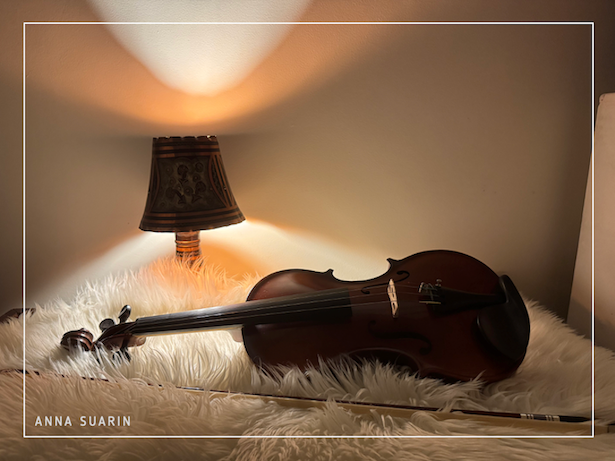
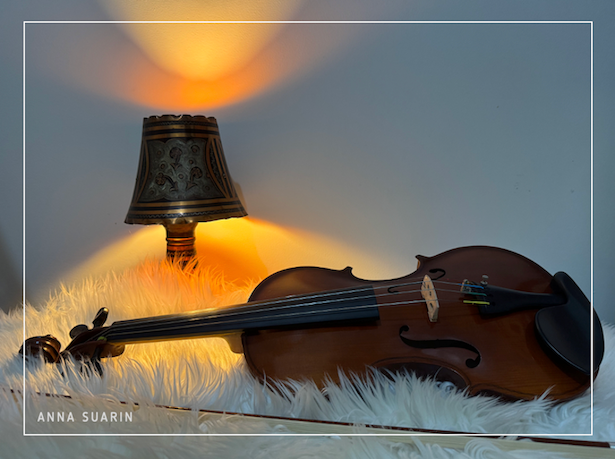
[7] Regular practice. Practice everyday or at least three times a week. A 15-minute routine daily is better compared with doing marathon sessions on weekends only. I’ve read this so much online and it’s true. It also helps build discipline and improve time management. In one of the images here, you’d notice that my violin is placed in my home office. That’s a good way to remember to squeeze it in no matter the busyness of life.
[8] Write notes and journal your progress. If you enjoy note-taking, this is another excuse to get yourself a violin notebook. Take note of how much you’ve been practicing, your daily learnings, dream playlist, tips from established violinists, and all that matter to you in your musical journey. You could also develop your own curriculum if you are on self-learning and have no teacher.
[9] Start with the music that you love. This works for me but may not be for all. Of course, the basic and foundational lessons are important. Nevertheless, as you go through the basics, it might help if you also begin learning the songs in your playlist. Based on my notes, I was able to learn one of my favorite songs in 36 hours of practice (combined). It took a while if converted into number of months (roughly four months spread over 7 months, at 15 to 20 minutes of practice /day). This means that if you can devote a practice of one hour a day, you can learn a simple song in just 36 days (or double that number if you can spare 30 minutes/day only).
[10] Enjoy the journey. Don’t be too hard on yourself. Again, it is a difficult instrument. One can probably learn a simple piano piece in a week’s time; probably not with a violin. Think of the amazing music you can play and share with loved ones. Think of co-creating with the great masters and our source-divine-universe. Being immersed with and cocreating music is indeed among the most exhilarating experiences that one can ever have.
Happy playing and co-creating, fellow musicians and music lovers!
REFERENCES and SUGGESTED READINGS
North American Japanese Garden Association. (n.d.). Design Considerations in constructing a suikinkutsu.
https://najga.org/journal-11-design-consideratons-in-constructing-a-suikinkutsu/
Pentreath, R. (2021, Mar 5). 10 of Bach’s all-time best pieces of music. https://www.classicfm.com/composers/bach/all-time-best-pieces-music/
Tanner, M. (2026, Jan 20). Beethoven! His 21 essential masterpieces, ranked. https://www.classical-music.com/features/works/beethoven-best-works
The Mozart Portal. (n.d.). Symphony No. 41 in C, “Jupiter”. https://www.mozartportal.com/en/composition/kv-551-symphony-no-41-in-c-jupiter
NOTE: I have developed a reference list devoted to the art of learning and playing violin. Please write to me if you wish to have a copy.
Mama Earth loves you: To maintain independence, this website is self-funded and this write-up is not a commissioned work. There is no request for donation but if you can plant a tree (or two!) on your birthdays, it will really be awesome and will make Mama Earth very happy! P.s. It’s better if you could join the You’ve Got TREE-mail! Chain.

Leave a Reply