

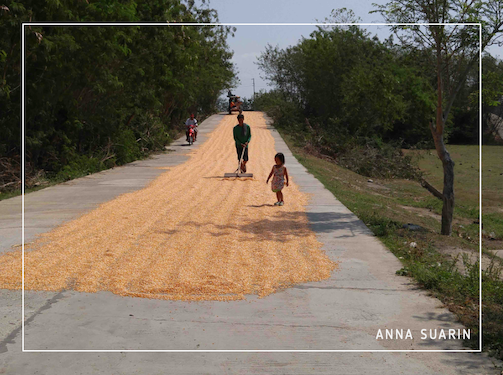
A sustainable future is not possible if those who bring food on the table are still among the poorest
How an ecosystem- and spatial-based approach to development and the optimization of the blue economy can empower farmers and fisherfolks
In our next meal, it’s time that we think more seriously about those who bring food on the table.
The Philippines is indeed a ‘rich’ country—blessed with immeasurable natural resources—where no one is supposed to be hungry. Our fertile soil and vast oceans replete with fishes and other marine resources could well be worth more than USD 7 trillion [1]. The blue economy’s intrinsic value (marine ecosystem goods and services) alone is about USD 6 trillion (Azanza et al., 2022) [2]. Using today’s forex (USD1 = PhP 61.63, updated 17 May 2026), this is equivalent to about PhP 438 trillion-worth of natural assets. In practical terms, the PhP 438 trillion could finance around 22 years of government spending under reasonable economic assumptions [3].
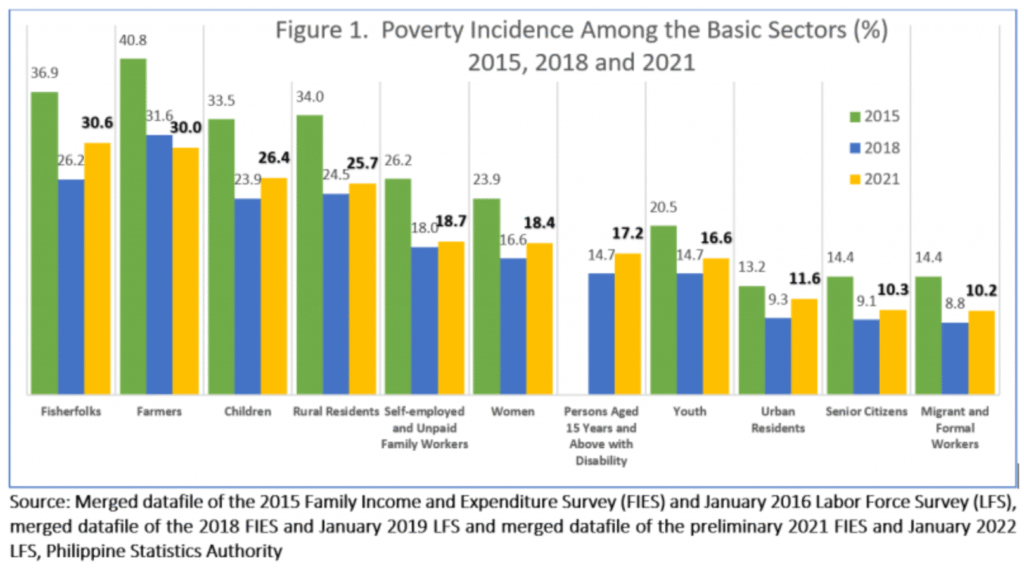
Therefore, easily, a country with such vast of resources (assuming they are managed in the most sustainable manner) should no longer have many of their farmers and fisherfolks living in poverty. However, in the Philippines, the numbers are glaring. For a country with such vast of natural wealth, many farmers and fisherfolks—those who put the food on the table—are the same ones who could not even afford to eat three square meals a day! Based on the latest official data (PSA, 2025), fisherfolks (30.6%) and farmers (30%) remain among the poorest in the basic sectors in terms of poverty incidence in 2021 [Figure 1]. The magnitude is significant. The PSA source did not indicate the actual numbers of poor farmers and fisher folks but the current estimate is at 2.7 million (Custodio & Sombilla, 2023) [4].
How can a country so rich in natural resources still have many of its farmers and fisherfolks living in poverty?
This has to change. In the age of internet, AI, and robotics, it is no longer just that those who toil under the sweltering heat and high-risk conditions in seas and oceans—so that we can all eat—are not receiving their just share in the nation’s wealth.
Note on Figure 1 data: Basic sectors are not mutually exclusive. This means that there are overlaps in the estimates in the sectors. For example, women may also be counted as senior citizens, farmers, etc. [Source of graph on the left: PSA, 2025]
Indeed, numbers don’t lie. What are the core reasons behind these unfortunate numbers? Why are our farmers and fisherfolks still poor? The roots and causes are quite complex. However, at the core of the complexities is the underperformance of the agriculture and fisheries sectors. What are the reasons for the underperformance? Answers are complex and have already been investigated many times over. This piece does not aim to make an exhaustive analysis. Instead, it will focus on offering a transformative pathway through which the sector—and practically, the whole country—can frame, plan for, and undertake its development. This proposes an ecosystem- and spatial-based approach to development while also fully optimizing the potential of the blue economy.
Before tackling the recommended pathway, this briefly shares some of the reasons for the under-performance of the agriculture and fisheries sector. There is no attempt to reinvent the wheel; the causes shared here are from existing studies and from a work that I (along with a TA team) have undertaken for the Asian Development Bank in 2023. The underperformance of the Philippine agriculture sector is mainly rooted in the following reasons: (i) shrinking farm size and land fragmentation; (ii) underperforming irrigation infrastructure; (iii) weak decentralization; (iv) open-access overfishing and fisheries collapse; (v) weak value chains and high post-harvest losses; (vi) climate vulnerability; (vii) trade liberalization; and (viii) low access to and mismatched knowledge assets, ICT, and financing. These are briefly explained below.
[1] Shrinking farm size and land fragmentation
A critical structural problem is the declining farm sizes, preventing economies of scale and lowering farm incomes. By 2012, the average farm size has decreased to just 1.29 hectares, down from 3.6 hectares in 1960 and 2.8 hectares in 1980 (Briones, 2022) [5]. The 2022 Census of Agriculture and Fisheries showed a significant decline to only 0.79 hectares, indicating a 53.4% reduction in just a decade (Dacul, 2026) [6].
This is contributing to further fragmentation of agricultural land, preventing economies of scale when it comes to productivity. The Comprehensive Agrarian Reform Program (CARP)—while well-intentioned—has aggravated the fragmentation (Briones, 2022). A study also noted that CARP reduced average farm size by 34% and agricultural productivity by 17%.It was estimated that under full enforcement, the productivity loss would have reached 26% (Adamopoulos & Restuccia, 2020, as cited in Briones, 2022).
[2] Lack of and weakness in irrigation infrastructure
Despite continued and substantial public investment, the Philippines’ national irrigation systems persistently underperform and fail to meet development targets. Irrigation expansion targets are “hardly met” even as funding has risen dramatically (Clemente et al., 2023; Inocencio & Briones, 2020) [7]. The study revealed another glaring dimension of the problem: more than 1.3 million liters per second of irrigation water—originally planned for distribution to farm lands—becomes unused (essentially wasted) because much of the lands intended for agricultural use has been converted to residential or commercial use. Despite this, the water rights remain with the National Irrigation Administration (NIA) (Briones et al., 2025) [8].
This wastage and underutilization are aggravated by deteriorating infrastructure, fragmented and/or weak water governance across 21 agencies, and poor information flows that prevent the reallocation of idle water for municipal or industrial purposes (Briones et al., 2025). On top of these, the budget process leaves much room for improvement. For instance, NIA’s irrigation allocations in the 2024 national budget were criticized for lack of transparency. This was observed in the way national and communal irrigation systems were lumped into single line items of PhP 22.2 billion and PhP 6.7 billion, respectively—a practice repeated in 2025 (Gatchalian, 2025) [9]. Meanwhile, NIA’s own administrator has acknowledged that, at current funding levels, achieving full irrigation coverage would take approximately 80 years, underscoring the deep structural and governance challenges that continue to hamper the agency’s effectiveness (Guillen, 2023, as cited in De la Cruz, 2023) [10].
[3] Overfishing and fisheries collapse
For a country with vast oceans and marine resources, the Philippines seems to be remiss in its job. The fisheries sector’s under-performance is rooted from decades of open-access fishing without effective regulation, not to mention poor implementation where it is present. A study found that the Philippines still exceeded its maximum economic yield in the 1960s. However, with fish stock harvests at 30% higher than sustainable levels from 1998 to 2001, the future of dwindling catch was just waiting to happen (Israel, Lunod-Carinan, & Paqueo, 2016) [11]. By then, economic losses from over-fishing were estimated at PhP 6.25 billion [12].
The situation has since been deteriorating. Government data showed that 88% of assessed Philippine fish stocks were overfished and depleted by 2023, with the national fish catch falling from 2.6 million metric tons in 2010 to just 1.9 million metric tons in 2023 (Oceana Philippines, 2026) [13]. The fisheries sector is shrinking at an annual rate of 45,000 metric tons due to overfishing, illegal fishing, and weak enforcement of fisheries laws (Oceana Philippines, 2026). Open access, as the PIDS study argued, is the root cause of dwindling catch and the dire state of marine resources (Israel et al., 2016) [14].
[4] Weak value chains including significant post-harvest losses
We see it almost annually: produce rotting on the roadside, many of them being thrown away because they could no longer be sold. Significant agricultural outputs are lost or wasted before even reaching consumers. Postharvest losses were estimated at 15% for rice and 13 to 29% for major fruits and vegetables (Serrano et al., 2009, as cited in PIDS, 2026) [15]. These perennially happen because of poor connectivity and logistics gaps ultimately causing high transport and logistical costs, significant food losses, and increasing food prices, which in turn trigger inflation (World Bank, 2025) [16]. In fisheries, spoilage rate is estimated from 25 to 40% due to seemingly ‘simple’ reasons such as lack of cold storage, blast freezers, and ice-making facilities (BFAR, 2023) [17].
[5] Climate risks and vulnerability
Typhoons, floods, and droughts caused an estimated 84.2% losses in Philippine rice production between 1970-1990 (ADB and World Bank, 2013, as cited in Velas-Suarin, 2023) [18]. “The Philippines is projected to experience an estimated decrease in agricultural productivity of 9-21% by 2050 due to climate change (Puhlin and Tapia, 2016, as cited in ADB and WBG, 2021). Moreover, typhoons, floods, and droughts could affect up to 85% of the country’s agricultural lands. Latest estimates indicate that the Philippines may lose up to PhP26 billion per year through 2050 due to climate change” [19].
The Philippines, being one of the world’s most climate-vulnerable countries, its agriculture sector bears significant brunt. Super-typhoon Goni (local name, Rolly) alone in 2020 caused over USD 103.3 million in agricultural losses, affecting more than 42,000 households (FAO, 2025) [20]. In 2024, six typhoons struck within a single month, with super-typhoon Man-Yi (local name, Pepito) severely damaging crops and displacing 1.5 million people (FAO, 2025) [21]. The cumulative effect is devastating: these recurring shocks destroy assets, disrupt planting cycles, and push smallholders who live just above the poverty line back into poverty each season.
[6] Trade framework (liberalization) and market pressures
The Rice Tariffication Law (RA 11203), enacted in 2019, liberalized rice imports and caused starkly different impacts. A study revealed that while the law reduced retail rice prices and benefited consumers, the costs fell disproportionately on smallholder rice producers (Briones, 2019) [22]. The rice farmers were made worse off, with projected income losses of about PhP 7.6 billion per year (in 2016 prices) up to 2024, rising to about PhP 12.6 billion per year by 2030. These show an average annual reduction of about PhP 10 billion (Briones, 2019) [23].
Meanwhile, farm gate palay prices were projected to increase by only 0.2% per year under liberalization, compared with 1.5% without it (PIDS, 2021) [24]. The same study estimated that poor families dependent on rice farming could lose an average of PhP 2.1 billion per year from 2022 to 2024 (PIDS, 2021) [25]. [Important caveat: Note that these data and estimates are from Covid-19 and post-pandemic years, therefore, there is a need to develop a more robust analysis covering more years. Nevertheless, the numbers should already convince policymakers and decision-makers to revisit RA 11203 so that those who deliver the food on our tables are not the same ones who could not even eat three square meals a day!]
The problems are complex and could not be fully taken up in this brief paper. The solutions are just as complex. Nevertheless, this article focuses on the urgency of re-framing our development approach. It is time to adopt an ecosystem- and spatial-based development framework.
Ecosystem-based development planning
The Philippines, being an archipelagic country with 7,641 islands, is immensely gifted with natural resources—all of which provide valuable ecosystem services. It has approximately 2,200,000 km² of seawater, which constitutes about 86% of its total area. Meanwhile, the land area is around 299,735 km², making up only 14% of the total area (PSA, 2018; DFA, 2008) [26, 27]. In simple spatial analysis, our marine area is roughly 7.3 times larger than its land area. While it is not coherent to compare an apple with an orange (i.e., land resources as against water and ocean resources), the significant spatial advantage of our marine resources highlights the need to revisit and transform the Philippines’ development framework for planning.
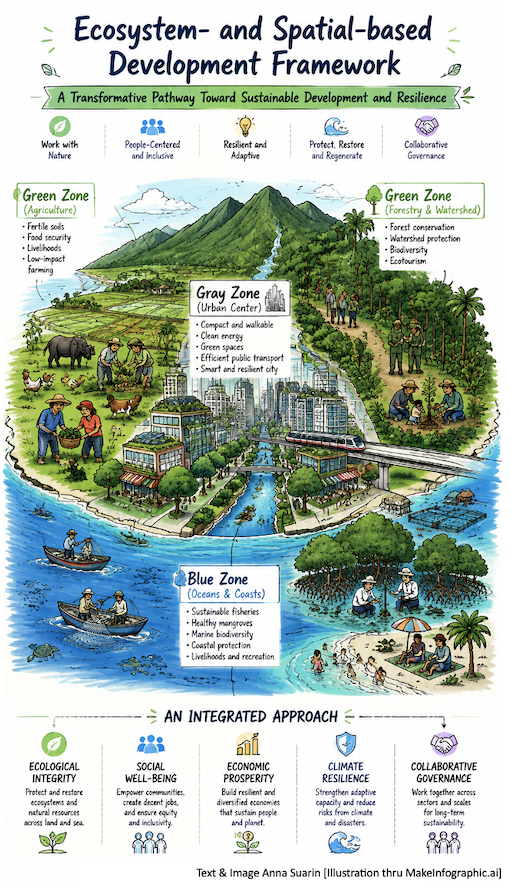
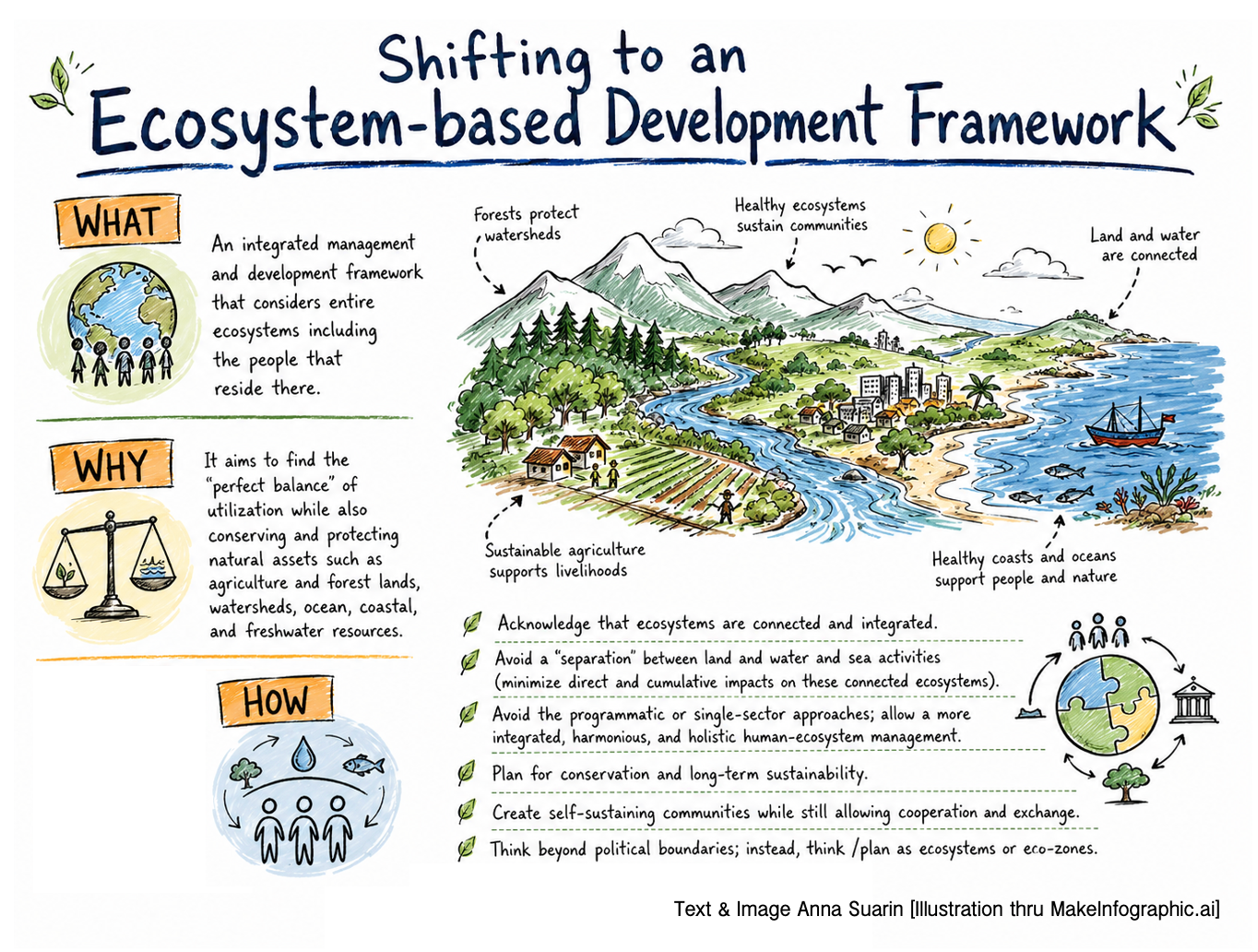
The archipelagic nature of the country necessitates a development approach that evolves from the unique and rich features and ecosystems of each region, island-group, or zones. Secondly, lessons from climate-related challenges and even from the Covid-19 pandemic necessitate an approach where such regions, island-groups, or zones will be more resilient and self-sustaining. While ‘perfect’ zoning and 100% self-sufficiency is not the likely possible nor even recommended, the ability to mitigate and manage future risks is largely dependent on resilient ‘stand-alone’ systems. Third, a more meaningful and effective devolution of agri-fishery services becomes more efficient in a decentralized and location-specific delivery (Velas-Suarin, 2023). To illustrate the concept, I developed the infographic below (with thanks to MakeInfographic.ai). Such a framework ‘thinks’ of ecosystems or eco-zones based on their key features and services while understanding that they still make a whole. This means, just because urban dwellers are in the gray zones, they should no longer think of how their activities and consumption impact those who are in the green and blue zones.
Finally, and not the least, an ecosystems-based framework will help ensure that practically all other environmental initiatives are intuitively and strongly anchored. For example, the pursuit of circular economy will likely be more integrated, cohesive, and efficient if interventions are ‘ecozone-based’ where there will be more serious, committed, and localized efforts in closing the loop (e.g., local communities see the impacts of more sustainable lifestyle or on the flip side, wastage/pollution, more closely). The same could be said for conservation efforts. The more localized, intuitive, and community-owned efforts are, the higher chances of success. Efforts and stories of conservation must be intrinsic in local cultures, norms, and behaviors–just like how we learn our mother tongue. We are not taught how to speak it. It naturally takes roots; it is intertwined in our core values. It is a part of who we are.
I have always been a proponent of this approach, seeing the huge potential of veering away from a programmatic approach and instead evolving toward a more integrated model /paradigm for development cognizant that resilience is about mainstreaming how governments and societies understand and tackle climate change. Resilience is not understood nor developed in a vacuum. I believe that’s a critical gap in how we tackle sustainable development: we still think of “resilience” and “sustainability” as if it’s just about the environment or ecology. It is not [28].
We also need to undertake meaningful reforms in governance—particularly in the context of local government units (LGUs), devolution (even federalism in the future?), and genuine participation of the civil society and private sector—all of these are necessary for sustainable development, resilience, and food security to happen.
What is ecosystem-based development or management framework? The concept is generally appreciated as an integrated management and development framework that considers entire ecosystems, including the people that reside there. It aims to find the ‘perfect balance’ of utilization while also conserving and protecting natural assets such as agriculture and forest lands, watersheds, ocean, coastal, and freshwater resources. In this approach, there is a bias for conservation and long-term sustainability, acknowledging that ecosystems are connected and integrated. As indicated earlier, this framework avoids a separation between land and water and sea activities—primarily minimizing direct and cumulative impacts on these connected ecosystems. Clearly, it avoids the programmatic or single-sector approaches, allowing a more integrated, harmonious, and holistic human-ecosystem management (with adaptation from UNEP, n.d.; ELI, n.d.) [29, 30].
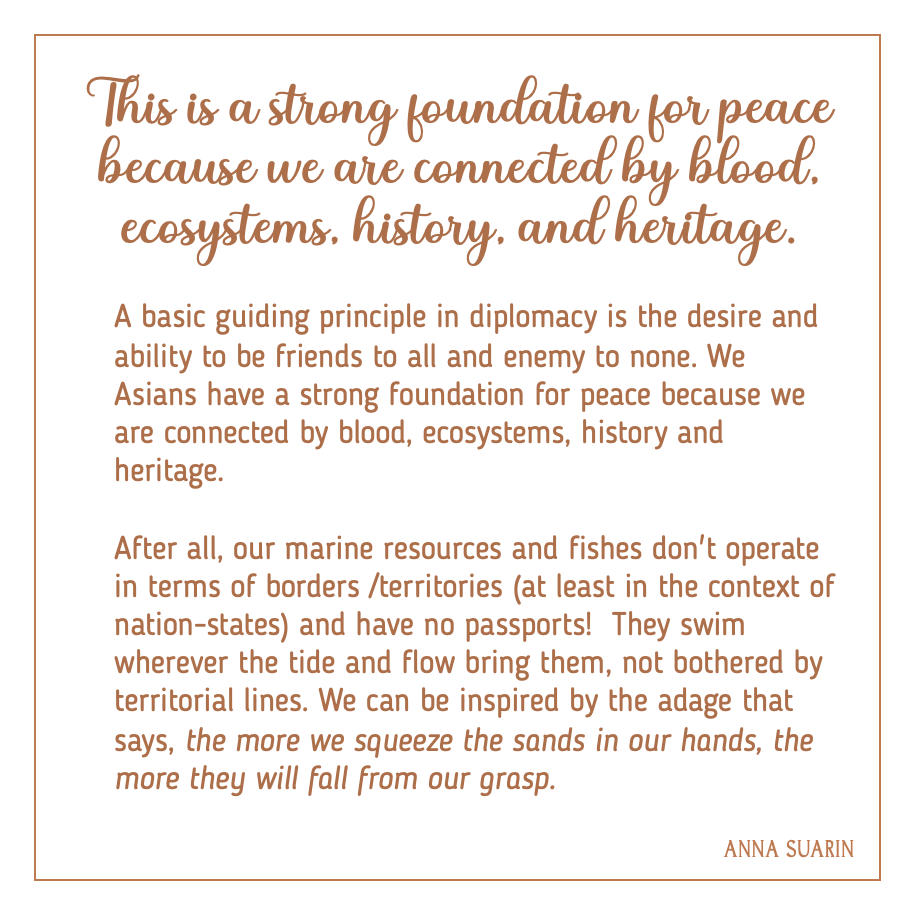
Adapted in the Philippine context, this requires looking at people and their ecosystems as what they are: connected and integrated. While boundaries such as provincial/municipal boundaries allow coherence in administration, they should be seen as ‘superficial’ in the sense that two, five, or even ten provinces may actually share the same ecosystems. In the context of oceans, boundaries practically disappear because fishes and other marine animals don’t care about them–they just continue to swim! Our marine resources and fishes don’t operate in terms of borders /territories (at least in the context of nation-states) and have no passports! (The full quote card on the right, is adapted from a post in my Instagram account, dated 13 Jan 2024). This is why it is important to consider a shift in mindset or learn from other schools of thought in evaluating long-term solutions for the situation in the South China Sea. This merits a separate discussion so I will tackle this with more depth in a future post. In the meantime, here is another illustration that quickly captures the steps that are necessary if we want to shift toward an ecosystem- and spatial-based development framework. (Thanks to MakeInfographic.ai for the help on the image.)
Why the pending blue economy bill must be anchored on this framework
There is a complexity happening right now because Congress of the Philippines is now tackling a proposed law on the blue economy. This is very timely and crucial. However, we must be concerned that the law on the blue economy will likely ‘float’ aimlessly without a law that serves as its ‘mother policy’. We need to first enact a law (or a strong policy issuance) that will institutionalize a more transformative development planning: the ecosystem- and spatial-based framework.
I’d like to share a little background story on this. Before 19th Congress ended, my team–I support the work of a legislator as an independent consultant–had worked on the bicameral version already. The principal was part of the bicameral conference and I was entrusted to help review the bill and attend the meetings on his behalf because budget deliberations were also happening. We proposed relevant amendments /improvements but because 19th Congress ended, the bill technically went back to zero at the start of the 20th Congress. It may be considered as a blessing-in-disguise because it gave the legislative arm more time to review and scrutinize the bill. (As an aside, we also proposed to simply tackle the bill in the next Congress.) As of this writing, it passed on third reading at the lower house (Dela Cruz, 2025) [31].
At the heart of my concern is the lack of a correct framing. As shared earlier, I believe we need to enact a law or issue a policy on the ecosystem-based development framework first. For one, a blue economy law must be situated and strongly anchored on a coherent development framework. I am beginning to craft a bill on this but concerned the law on the blue economy will get enacted without it. I will exert efforts and perhaps lobby with my principal but, as you will understand, it is not that simple. A step that anyone can do is write to the Senate–furnishing the Department of Economy, Planning, and Development (DEPDev)–and find out whether it can still postpone the blue economy bill and fast track a ‘mother bill’ on the ecosystem-based development framework. Hopefully, I can also do this very soon!
Anyway, to go back to the story during the 19th Congress, because I was so concerned (and my principal then was busy with the deliberations on the national budget), I actually wrote to the DEPDev, as a Filipino citizen, but it has not replied. I trust DEPDev have collaborative people–I supported it once through a UNDP-supported project–and certainly recall having great colleagues (and an awesome boss!). Hopefully, a follow-up letter from my Principal–or me if time is not on our side–will help move the proposed amendments forward and, more importantly, the drafting and issuance of the ‘mother’ policy.
The role of DEPDev
Again, the proposed law on the blue economy must be anchored on a coherent ecosystem- and spatial-based development framework. If the country enacts the blue economy bill without it, it is like putting the cart before the horse. It is then hoped that with DEPDev’s change in its name from the original National Economic and Development Authority (NEDA), the government can also think about the ‘bigger’ challenge on where to fully ground and root the ‘new’ DEPDev so that it becomes a stronger and more agile and powerful organization. Clearly, a stronger and more transformative DEPDev (anchored on a clear ecosystem-based framework) could most likely allow the country to continue its positive economic trajectory no matter if there are political quagmires and debacles.
Not to undermine the work of DEPDev but to emphasize that among all agencies, it is very critical that it protects itself from being politicized–because it carries the heart and wheels of development. It should remain politically-neutral no matter the pressure; it should be the most powerful agency that carries the most burden in shaping and directing the economy. It may be difficult to ‘depoliticize’ DEPDev and make it stronger (and more independent) but perhaps preventing any Philippine President from appointing a DEPDev Secretary can help. Another possible solution is to require appointing the Secretary from within the organization where employees will also have direct participation. Outside of the leadership challenge, there may also be a need to undergo an organizational development process, which could lead to improved capacity of regional offices and ultimately local governments. This can be tackled in a future piece. (Please write to me if you wish to co-write it or another related topic with me.)
I will write another article focusing more closely on the blue economy but I hope this one already contributes to more and deeper discourses and analytical work. I also hope the Senate and DEPDev will find this useful and timely. To end this, I’d like to share this quote card, which I originally posted in my Instagram (13 Jan 2024). Indeed, let us not forget that we cannot own nature including our oceans. Our development paradigms should always evolve from the recognition of the grand design.

Notes and references:
[1] It is difficult to derive a more robust estimate due to lack of data. This estimate is derived by adding figures from best-available monetary values for land-based resource categories with mining resources estimated at US$ 1 trillion (Vantage FDI, 2025), and then adding the estimated US$ 6 trillion value of the blue economy (Azanza et al., 2022). All values are from official government data, peer-reviewed studies, or recognized industry reports. The result is a conservative, directional total, as it combines annual flow values (forestry, agriculture, ecosystem services, tourism, industrial land rentals) with stock values (e.g., minerals and real-estate land).
[2] Azanza, R. V., Sanchez-Escalona, K., & Largo, D. B. (2022). A sustainable and inclusive blue economy for the Philippine archipelago. Transactions NAST PHL, 44. https://doi.org/10.57043/transnastphl.2022.2564
[3] To project future budgets, a nominal annual increase of 10% is applied. This rate aligns with the Philippines’ medium-term macroeconomic outlook, for exampe, based on (i) real GDP growth of 6-7% (International Monetary Fund, 2025); (ii) inflation averaging 3-4% (Bangko Sentral ng Pilipinas, 2025); (iii) historical national budget growth of about 10% per year over the last decade (DBM, 2025).
[4] Custodio, K. Q., & Sombilla, M. A. (2023). Rural transformation in the Philippines: A development agenda (Policy Papers Vol. 2023 No. 1). SEARCA. https://www.searca.org/pubs/briefs-notes?pid=565
[5] Briones, R. M. (2022). Enhancing profits and incomes in agriculture and fisheries (Discussion Paper Series No. 2022-44). Philippine Institute for Development Studies. https://pidswebs.pids.gov.ph/CDN/document/pidsdps2244.pdf
[6] Dacul, A. (2026, February 10). Harnessing economies of scale in agriculture (Part 1). Manila Bulletin. https://mb.com.ph/2026/2/10/harnessing-economies-of-scale-in-agriculture-part-1
[7] Clemente, R. S., Fajardo, A. L., Ballaran, V. G., Jr., & Ureta, J. C. P. (2023). Evaluation of national irrigation systems in the Philippines (Policy Note). Philippine Institute for Development Studies. https://pidswebs.pids.gov.ph/CDN/PUBLICATIONS/pidspn1908.pdf
[8] Briones, R. M., Azis, A., & colleagues. (2025). Repurposing rights to expand public access to water: The case of the National Irrigation Administration. Philippine Institute for Development Studies. https://manilastandard.net/business/314614015/massive-water-allocation-wasted-due-to-idle-irrigation-in-the-philippines.html
[9] Gatchalian, S. (2025, October 17). Gatchalian blasts ‘undetailed’ funds, urges NIA to stop practice. BusinessMirror. https://businessmirror.com.ph/2025/10/17/gatchalian-blasts-undetailed-funds-urges-nia-to-stop-practice/
[10] De la Cruz, J. M. N. (2023, September 22). Food security concern: NIA urges House to restore P91-B capital outlay allotment. BusinessMirror. https://businessmirror.com.ph/2023/09/22/food-security-concern-nia-urges-house-to-restore-p91-b-capital-outlay-allotment/
[11] Israel, D., Lunod-Carinan, M., & Paqueo, V. (2016). Adverse effects of open access fishing in the Philippines must be addressed (Discussion Paper Series). Philippine Institute for Development Studies. https://pidswebs.pids.gov.ph/CDN/PUBLICATIONS/pidsdps1636.pdf
[12] Israel, et al. (2016)
[13] Oceana Philippines. (2026, February 5). Philippines fisheries near collapse as 45 million kilos lost annually. The Philippine Star. https://www.philstar.com/headlines/2026/02/05/1298768/philippines-fisheries-near-collapse-45-million-kilos-lost-annually
[14] Israel, et al. (2016)
[15] Philippine Institute for Development Studies. (2026). How effective are our postharvest facilities? (Policy Note). https://pidswebs.pids.gov.ph/CDN/PUBLICATIONS/pidspn2603.pdf
[16] World Bank. (2025). Enhancing rural incomes and productivity in agriculture and fisheries in the Philippines. https://documents1.worldbank.org/curated/en/099011225105035171/pdf/P181144110e4f00be1a051110a68810917d.pdf
[17] Bureau of Fisheries and Aquatic Resources. (2023, January 13). BFAR seeks to reduce post-harvest losses. https://www.bfar.da.gov.ph/2023/01/13/bfar-seeks-to-reduce-post-harvest-losses/
[18] Velas-Suarin, M. (2023). Deepening Climate Related Organizational Reforms in the Department of Agriculture to Sharpen and Better Harmonize Climate Action, Perspectives & Prospects in Local Governance. Unpublished report submitted to ADB.
[19] This quoted material is from the same report.
[20, 21] Food and Agriculture Organization. (2025). Delivering shock-responsive social protection to farmers and fishers in the Philippines. https://www.fao.org/knowledge/policy-assistance/delivering-shock-responsive-social-protection-to-farmers-and-fishers-in-the-philippines/en/
[22, 23] Briones, R. M. (2019). Rice farmers worse off under liberalization (PIDS Policy Brief). Philippine Institute for Development Studies. https://pidswebs.pids.gov.ph/CDN/PUBLICATIONS/pidspn1908.pdf
[24, 25] Philippine Institute for Development Studies. (2021). RCEF capable of offsetting Rice Tariffication Law income losses. https://pidswebs.pids.gov.ph/CDN/PUBLICATIONS/pidspn2117.pdf
[26] Department of Foreign Affairs. (2008). The Philippine archipelago and maritime jurisdiction. https://dfa.gov.ph/images/dfa/2008_ph_archipelago_maritime.pdf
[27] Philippine Statistics Authority. (2018). 2018 Philippine statistical yearbook. https://psa.gov.ph/sites/default/files/2018%20PSY.pdf
[28] The discussion in this paragraph is also adapted from my 2023 report (see 18). In this context, I define “programmatic” as the approach to tackle development issues by developing and implementing programs (that often get applied /implemented in different areas /locations) as compared with an ecosystem- or spatial-based approach where interventions are carefully adapted to ecosystem features of particular landscapes /seascapes. At the risk of being repetitive, it must be highlighted again that concerns such as climate resilience and food security should not be tackled only as sole responsibilities of specific departments/ministries (e.g., agriculture and environment). Every department’s support and participation are crucial.
[29] United Nations Environment Programme. (n.d.). Ecosystem-based approaches. https://www.unep.org/topics/ocean-seas-and-coasts/ecosystem-based-approaches
[30] Environmental Law Institute. (n.d.). Marine spatial planning & ecosystem-based management. https://www.eli.org/ocean-planning/marine-spatial-planning-ecosystem-based-management.
[31] Dela Cruz, J.M. (2025, Dec 17). House approves Blue Economy bill. https://businessmirror.com.ph/2025/12/17/house-approves-blue-economy-bill/
Mama Earth loves you: To maintain independence, this website is self-funded and this write-up is not a commissioned work. There is no request for donation but if you can plant a tree (or two!) on your birthdays, it will really be awesome and will make Mama Earth very happy! P.s. It’s better if you could join the You’ve Got TREE-mail! Chain.

Leave a Reply